
What to Wear Diving in the Pacific Northwest
Christie Davis Aug 28, 2026
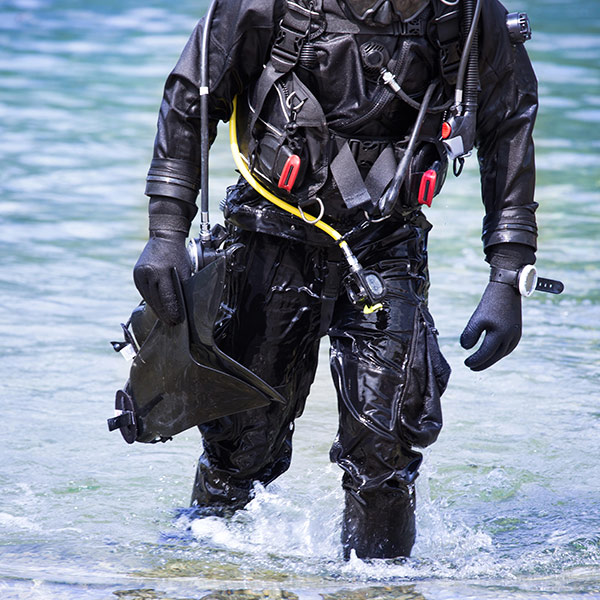 A drysuit is the headline piece of gear for Pacific Northwest diving, but it’s not the whole story. What you wear underneath, on your hands, and on your head matters just as much for staying warm through a full dive. Here’s the full picture.
Start with the drysuit itself
Your drysuit’s job is simple: keep water off your skin entirely. The material (neoprene or trilaminate) affects fit, flexibility, and how much of the insulating work the suit does on its own versus leaving it to your undergarments. If you’re deciding between the two, we cover that in more detail in our drysuit buying guide.
Layer underneath like you would for cold weather outside
The suit keeps water out, but a thin layer of air trapped underneath is what actually keeps you warm, and that only works if you’ve got the right undergarments. Divers Alert Network recommends a three-part approach: a base layer to wick moisture away from your skin, an insulating mid-layer (fleece or merino wool are common choices), and a third layer if conditions call for it, according to DAN.
This is exactly the kind of system Hollis’s AUG undergarments are built around: modular top and bottom pieces in different weights, so you can dial in more or less insulation depending on the season and how cold the water actually is that day.
Don’t skip the hood
A huge amount of body heat is lost through your head, which is why a good hood isn’t optional for Pacific Northwest diving. Whether it’s attached to your drysuit or a separate piece, make sure it seals well around your face with no gaps.
Gloves matter more than people expect
Cold hands lose dexterity fast, and that’s a real problem underwater when you need to operate your gear. Dry gloves keep your hands completely out of the water and pair with an undergarment layer of their own, while thick wetsuit-style gloves are a simpler option for shorter or shallower dives. Either way, DAN’s advice is worth taking seriously: practice putting them on and taking them off before you actually need to, since a flooded glove or a stuck zipper is not something you want to be figuring out for the first time mid-dive.
Boots, and one more thing
Drysuit boots (either built in or attached separately) round out the system, keeping your feet as protected as the rest of you. And one tip that’s easy to forget: as soon as you’re out of the water, get your hood off and get into dry clothes quickly. Staying in wet gear after a dive is one of the fastest ways to get uncomfortably cold, even on land.
Getting fitted for real
Every diver runs warm or cold a little differently, so the “right” layering setup is something worth working out in person rather than guessing at from a blog post. Stop by the shop and we’ll get you set up with a drysuit and undergarment combo that actually matches how you dive, or check out what we carry on our drysuits page.
